Guides
Caffeine in Coffee Beans: Comprehensive Measurement Guide
A single roasted coffee bean contains an estimated ~1–4 mg of caffeine, depending on species and bean size (Arabica ≈1–2.3 mg; Robusta ≈2.6–4.0 mg, estimates).
- Typical roasted Arabica bean contains about 1.3–2.3 mg of caffeine; Robusta about 2.6–4.0 mg (contained, before brewing).
- Extraction into the cup is less: a bean usually contributes ~0.8–3.2 mg of caffeine to brewed coffee depending on brew method and strength.
- A 240 ml cup of drip coffee contains exactly 96 mg (dataset); cold brew 240 ml contains 200 mg.
- FDA daily limit for healthy adults is 400 mg/day; pregnancy guidance ≈ 200 mg/day (EFSA/Mayo Clinic summaries).
Caffeine per individual coffee bean (estimates and how we calculate them)
Direct laboratory measurements of a single bean vary with size and species. To give a practical estimate we combine typical roasted-bean weights and published caffeine concentration ranges.
Contained caffeine (what’s inside the bean)
Assumptions used: a roasted bean commonly weighs ~0.12–0.15 g. Typical caffeine concentration ranges reported in agronomy literature are roughly 1.1–1.5% for Arabica and 2.2–2.7% for Robusta. Multiplying weight × concentration gives contained caffeine:
- Arabica: 0.12–0.15 g × 1.1–1.5% → ≈ 1.3–2.3 mg caffeine per bean (contained).
- Robusta: 0.12–0.15 g × 2.2–2.7% → ≈ 2.6–4.0 mg caffeine per bean (contained).
Extracted caffeine (what ends up in your cup)
Not all the bean’s caffeine is brewed out. Typical extraction efficiency is 60–80% depending on grind, water, time and brew ratio. So a single Arabica bean often contributes ~0.8–1.8 mg to a brewed cup; a Robusta bean ~1.6–3.2 mg (approximate ranges).
Caffeine content by weight and in common drinks (dataset values)
Below is a selection of exact values from beverage measurements used as reference points; these are dataset numbers and useful for converting from whole-bean math to real cups.
| Drink | Serving | Caffeine (mg) | mg/100 ml (if provided) |
|---|---|---|---|
| Espresso (single) | 30 ml | 63 mg | |
| Espresso (double) | 60 ml | 126 mg | |
| Drip coffee | 240 ml | 96 mg | 40 mg/100ml |
| Pour over | 240 ml | 145 mg | 60.4 mg/100ml |
| Cold brew | 240 ml | 200 mg | 83.3 mg/100ml |
| Nitro cold brew | 240 ml | 215 mg | 89.6 mg/100ml |
| Decaf coffee | 240 ml | 3 mg | 1.2 mg/100ml |
| Starbucks Pike Place (Grande) | 473 ml | 310 mg | |
| Bang (energy) | 473 ml | 300 mg | 63.4 mg/100ml |
| Black tea | 240 ml | 47 mg | 19.6 mg/100ml |
Worked examples: how many mg a bean contributes to a cup
Two practical calculations using dataset cups and a common grounds weight assumption (15 g coffee per 240 ml cup):
- Drip coffee (240 ml = 96 mg): 96 mg ÷ 15 g = 6.4 mg extracted per gram of grounds. If a bean is 0.125 g, that’s 6.4 × 0.125 ≈ 0.8 mg per bean delivered to the cup.
- Pour-over (240 ml = 145 mg): 145 ÷ 15 = 9.67 mg/g. At 0.125 g/bean that’s 9.67 × 0.125 ≈ 1.2 mg per bean.
These per-bean delivered values are lower than the contained-caffeine estimates because brewing doesn’t extract 100% of the caffeine.
How brewing variables change the per-bean result
Extraction increases with finer grind, higher water temperature (within 90–96°C), longer contact time (immersion methods), and higher brew ratio (more grounds per water). Cold brew and nitro formulas in the dataset are higher because they use larger dose: Cold brew 240 ml = 200 mg, Nitro 240 ml = 215 mg.
Health, safety and sleep timing
Key safety numbers: FDA guidance for healthy adults is up to 400 mg/day; most pregnancy guidance (EFSA/Mayo Clinic summaries) suggests limiting to ≈ 200 mg/day. The American Academy of Pediatrics discourages caffeine for adolescents. Symptoms of overconsumption include jitters, heart palpitations and sleep disruption.
Caffeine elimination follows first-order kinetics. Using a population-average half-life of 5.7 hours, roughly 69% remains after 3 hours, 48% after 6 hours, 33% after 9 hours and 23% after 12 hours. That timing matters for evening caffeine and sleep.
| Dose example | 0 h | ~3 h (69%) | ~6 h (48%) | ~9 h (33%) | ~12 h (23%) |
|---|---|---|---|---|---|
| Cold brew (240 ml) | 200 mg | 138 mg | 96 mg | 66 mg | 46 mg |
| Starbucks Pike Place (473 ml) | 310 mg | 214 mg | 149 mg | 102 mg | 71 mg |
How to measure and track for precision (and why CoffeeLog helps)
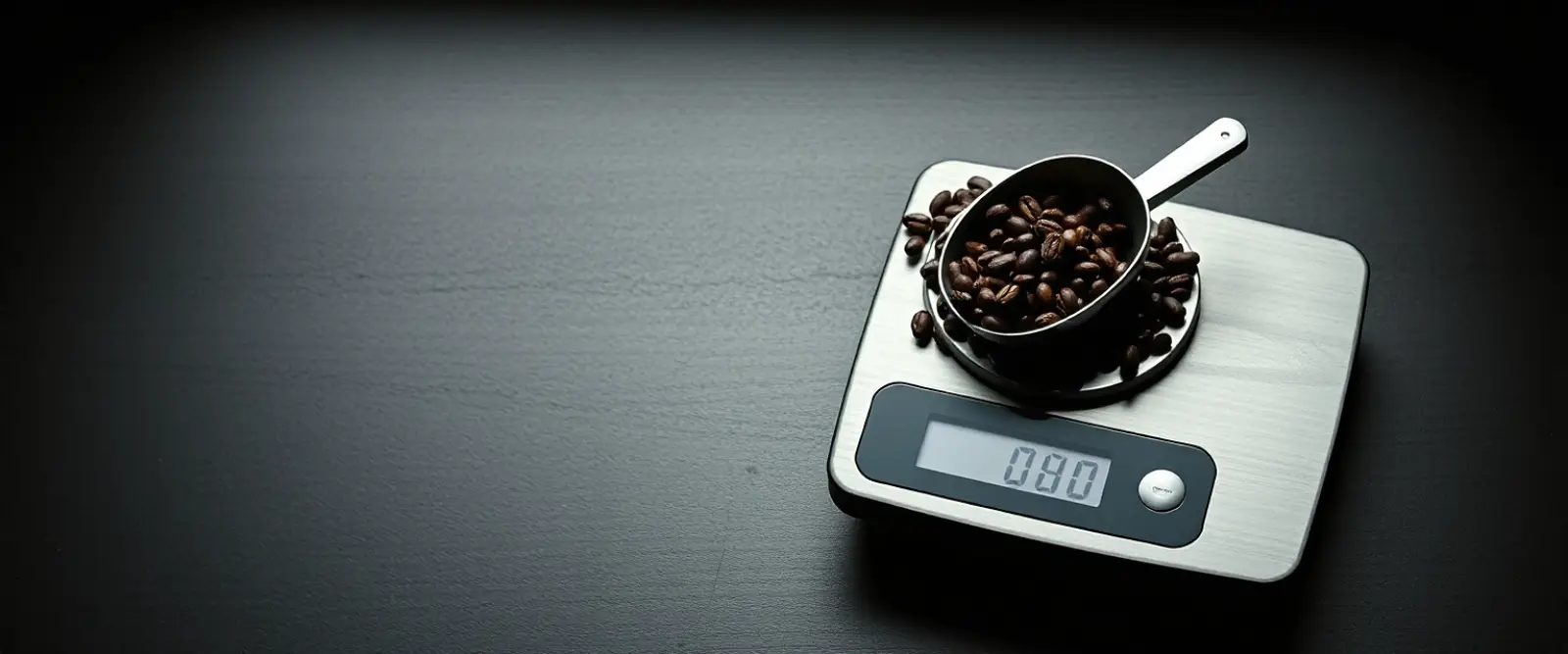
If you want precise tracking, measure the grams of whole beans you use and the final drink caffeine from trusted sources like USDA FoodData Central or standardized chain data in the dataset above. Log cups, beans and time of consumption to estimate remaining caffeine before bed; an app such as CoffeeLog will automate mg totals and decay math for you.
Practical tips: weigh whole beans for accuracy, note the species (Arabica/Robusta), and adjust for brew method—espresso extracts differently than cold brew. For pregnancy or medical concerns, consult a clinician before changing caffeine intake.
Sources referenced: USDA FoodData Central for beverage baselines, FDA guidance on daily caffeine limits, EFSA and Mayo Clinic summaries for pregnancy advice, and standard pharmacokinetic half-life (population average 5.7 h).
How do I convert any drink in the dataset into beans (exact math)?
Take the drink’s caffeine in mg from the dataset, divide by the grams of grounds used for that serving, then multiply by the weight of one bean to get mg contributed per bean; that gives a per-bean delivered range for that specific drink. For example, using a common assumption of 15 g of grounds per 240 ml cup and a bean weight of 0.125 g, a drink listed as 240 ml = 96 mg (dataset) delivers 96 ÷ 15 = 6.4 mg per gram of grounds, and 6.4 × 0.125 = 0.8 mg per bean for that cup.
Extraction efficiency is the percentage of the bean’s contained caffeine that ends up in the brewed cup. Apply the same arithmetic to any dataset drink: for Cold brew 240 ml = 200 mg (dataset), 200 ÷ 15 = 13.33 mg/g and 13.33 × 0.125 = 1.67 mg per bean delivered; for Pour over 240 ml = 145 mg (dataset), 145 ÷ 15 = 9.67 mg/g and 9.67 × 0.125 = 1.21 mg per bean delivered.
Use this method with other servings and grounds weights: espresso uses far less grounds per shot, so convert by grams per shot if you weigh them, or use the site’s grinder/brew guides to estimate grounds per serving; see our coffee brewing ratio calculator guide for typical grams-to-cup numbers and our half-life calculator to combine per-bean arithmetic with decay math.
How many whole beans equal the caffeine in a common drink like a 240 ml cup?
You can express any dataset drink as a range of whole beans by dividing the drink mg (dataset) by a plausible per-bean delivered range; that produces a low–high bean count that captures Arabica/Robusta and extraction variability. For example, Drip coffee 240 ml = 96 mg (dataset); using a delivered range of ~0.8–1.8 mg per Arabica bean (this guide’s estimates), 96 ÷ 1.8 ≈ 53 beans at the high-per-bean end and 96 ÷ 0.8 = 120 beans at the low-per-bean end, so a 240 ml drip cup is roughly 53–120 Arabica beans equivalent.
Bean equivalence is a conversion, not a physiological statement about absorption. Equivalence is the calculated number of whole beans that would provide the same mg of caffeine as a listed drink. Repeat the arithmetic for Cold brew 240 ml = 200 mg (dataset): for Arabica (0.8–1.8 mg delivered per bean) the range is 200 ÷ 1.8 ≈ 111 beans to 200 ÷ 0.8 = 250 beans; for Robusta (1.6–3.2 mg delivered per bean) the range is 200 ÷ 3.2 ≈ 63 beans to 200 ÷ 1.6 = 125 beans.
Practical use: if you count beans, convert your usual cup with this method and log the result; see the site’s caffeine half-life calculator and last-cup-before-bed tool to combine bean counts with timing estimates when planning intake before sleep.
How many beans can I eat and stay under the daily limits set by regulators?
Divide the regulator’s mg limit by your per-bean delivered estimate to get a bean ceiling. The U.S. Food and Drug Administration puts the recommended limit for healthy adults at 400 mg/day (FDA), and the European Food Safety Authority sets a pregnancy limit of about 200 mg/day (EFSA 2015), so do the math against those numbers.
Daily limit is the maximum recommended daily caffeine intake from all sources. Using this guide’s delivered-per-bean ranges, for healthy adults under the FDA 400 mg/day guideline, eating Arabica beans at ~0.8–1.8 mg extracted-equivalent per bean yields 400 ÷ 1.8 ≈ 222 beans to 400 ÷ 0.8 = 500 beans (range). For Robusta at ~1.6–3.2 mg per bean that range is 400 ÷ 3.2 = 125 beans to 400 ÷ 1.6 = 250 beans.
For pregnancy guidance (≈200 mg/day per EFSA 2015), the same arithmetic halves those counts: Arabica ≈111–250 beans and Robusta ≈63–125 beans. These calculated counts are only illustrative—whole-bean ingestion delivers caffeine faster than sipping brewed coffee and other products (see our pregnancy guide and safe daily limit by weight tool).
How much caffeine remains in my blood after X hours from a dataset drink?
Use first-order elimination with a population-average half-life of 5.7 hours: remaining mg = Dose × 0.5^(hours/5.7); that gives the exact remaining mg at any hour. For commonly used checkpoints, roughly 69% remains after 3 hours, 48% after 6 hours, 33% after 9 hours and 23% after 12 hours (population-average half-life 5.7 h used for these percentages).
Half-life is the time required for blood concentration to fall by half. Apply that to dataset drinks: Drip coffee 240 ml = 96 mg (dataset) → after 6 h: 96 × 0.48 = 46.1 mg remaining; Cold brew 240 ml = 200 mg (dataset) → after 6 h: 200 × 0.48 = 96 mg remaining; Starbucks Pike Place 473 ml = 310 mg (dataset) → after 9 h: 310 × 0.33 = 102.3 mg remaining. The sleep literature shows meaningful effects: a 400 mg dose taken 6 hours before bedtime reduced total sleep time by over an hour in a controlled study (Drake et al., 2013) (Drake et al. 2013).
To plan your last cup, plug the dataset dose into the formula above and compare the remaining mg at your target bedtime; our last cup before bed tool automates these calculations and links directly to the per-drink dataset values used here.
Does eating roasted beans cause a faster caffeine spike than drinking the same mg in brewed coffee?
Yes: whole-bean ingestion tends to produce faster gastric absorption than sipping a dilute brew, so the subjective spike can be quicker for the same mg dose, while the total mg exposure stays the same. Bioavailability is the fraction of an ingested dose that reaches systemic circulation; for caffeine, oral bioavailability is high and similar across forms, but rate of absorption differs with formulation.
Concrete comparison using dataset and bean estimates: eating 25 average roasted Arabica beans (this guide’s contained estimate ~1.3–2.3 mg per bean) contains about 32.5–57.5 mg of caffeine contained; a small instant cup 240 ml = 62 mg (dataset) is roughly comparable in total mg. However caffeine gum or liquid forms can deliver caffeine into the bloodstream faster than both beans and brewed coffee (see our guide on stimulant formats and dosage guide). If you track exact timing and mg, logging beans versus cups can matter for perceived onset—CoffeeLog or manual logging converts bean counts into mg and time-stamps to reveal those patterns (chocolate covered espresso beans guide discusses rapid ingestion examples).
Bottom line
A roasted coffee bean contains an estimated ~1–4 mg of caffeine (this guide’s contained-bean estimates: Arabica ≈1.3–2.3 mg; Robusta ≈2.6–4.0 mg), and a single bean typically contributes ~0.8–3.2 mg to a brewed cup after extraction (this guide’s extracted-per-bean range). Use the dataset beverage numbers to do exact conversions: Drip coffee 240 ml = 96 mg (dataset), Pour over 240 ml = 145 mg (dataset), Cold brew 240 ml = 200 mg (dataset), Espresso (single) 30 ml = 63 mg (dataset).
To convert a dataset drink to beans, divide the drink mg by grams of grounds used and multiply by the weight of one bean (example: 96 mg ÷ 15 g × 0.125 g/bean = 0.8 mg per bean for a 240 ml drip cup). For timing, model elimination with a population-average half-life of 5.7 hours (remaining mg = Dose × 0.5^(hours/5.7)); with that model roughly 48% of a dose remains after 6 hours and 23% after 12 hours. Regulators recommend limits you can use with these conversions: FDA cites 400 mg/day for healthy adults (FDA) and EFSA’s 2015 opinion suggests ~200 mg/day during pregnancy (EFSA 2015), so divide those mg limits by your per-bean estimate to get safe bean counts.
- If you want exact numbers, use the drink mg from the dataset, apply the grams-of-grounds → mg/g conversion and then multiply by bean weight; see our calculator and last cup tool.
- Remember: the same mg in beans can hit faster than a brewed cup; for pregnancy, adolescents or medical conditions consult the dedicated guides on this site such as caffeine in pregnancy and safety for teenagers.
Frequently asked questions
How much caffeine is in a single coffee bean?
A single roasted Arabica bean contains roughly 1.3–2.3 mg of caffeine (contained); Robusta contains about 2.6–4.0 mg. After brewing, a bean typically contributes ~0.8–3.2 mg to the cup, depending on extraction efficiency.
Do Robusta beans have more caffeine than Arabica?
Yes. Robusta typically has roughly double the caffeine concentration of Arabica (Robusta ≈2.2–2.7% vs Arabica ≈1.1–1.5%), so per-bean caffeine is higher—roughly 2.6–4.0 mg contained versus 1.3–2.3 mg for Arabica.
How much caffeine does an espresso shot contain compared with a drip cup?
A single espresso (30 ml) in the dataset contains 63 mg; a 240 ml drip coffee contains 96 mg. Espresso is concentrated per ml, but a typical cup of drip can have more total caffeine because the serving is larger.
Can eating coffee beans give you too much caffeine?
Yes. Roasted coffee beans contain measurable caffeine and eating many can quickly raise intake. Because a single bean has ~1–4 mg contained, consuming dozens of beans could approach the FDA 400 mg/day limit; seek medical advice if you experience severe symptoms.
How long does caffeine from coffee stay in my system?
Population-average half-life is about 5.7 hours. Roughly 69% remains after 3 hours, 48% after 6 hours and 23% after 12 hours. Individual metabolism varies with genetics, medications and pregnancy.
Is caffeine safe during pregnancy?
Medical authorities generally advise limiting caffeine in pregnancy to about 200 mg/day. Discuss personal risk with your healthcare provider; the page cites EFSA/Mayo Clinic guidance and is informational, not medical advice.
How many average roasted Arabica beans equal a 200 mg dose?
Using this guide’s delivered-per-bean estimate for Arabica (~0.8–1.8 mg extracted per bean), a 200 mg dose equals roughly 200 ÷ 1.8 ≈ 111 beans at the high-per-bean end up to 200 ÷ 0.8 = 250 beans at the low-per-bean end.